
Twenty-Four Solar Terms, mapped to the sun’s path
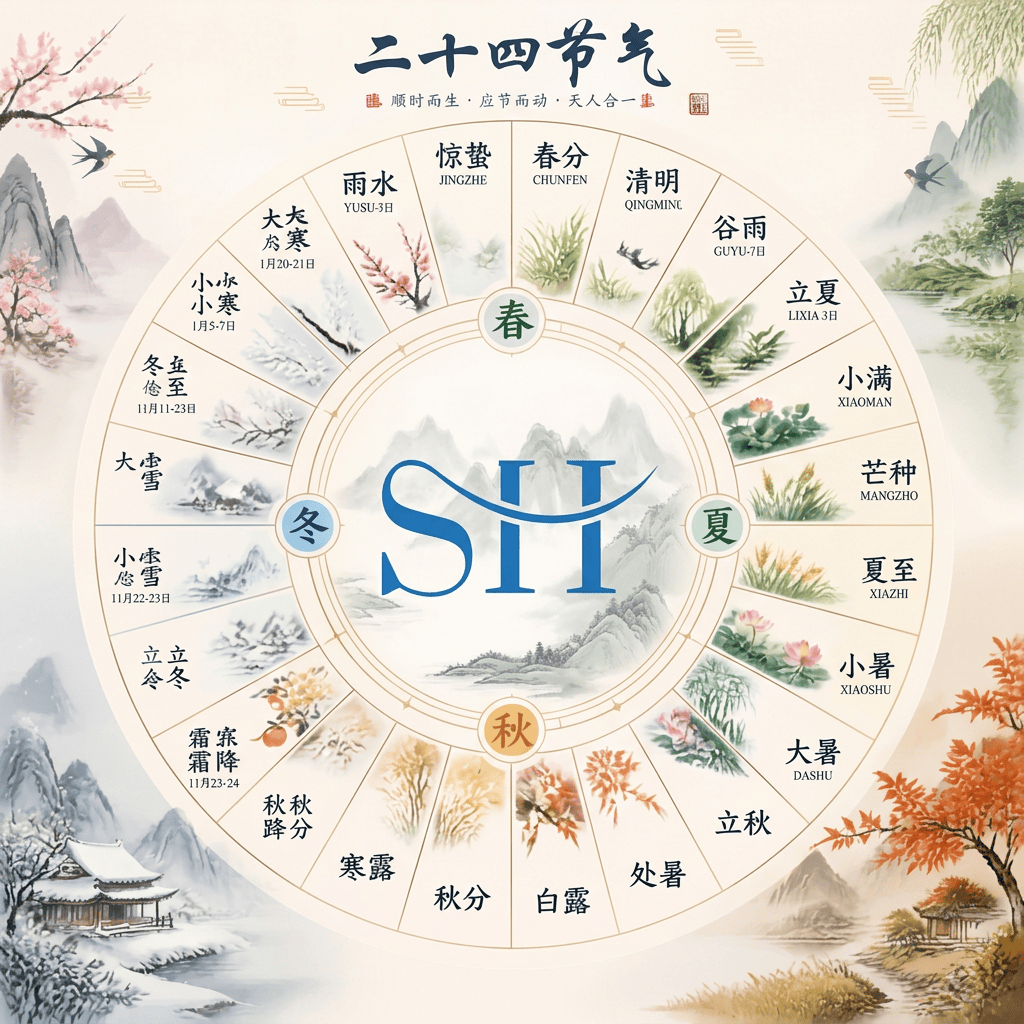
The 24 Solar Terms (二十四节气) are a traditional Chinese system that divides the solar year into 24 stages, each marking the moment the sun reaches a specific point along the ecliptic — 15° of longitude apart. Where the Western calendar tracks days and months, this system tracks the sun’s actual path, so each term corresponds to a genuine astronomical event rather than an arbitrary date.
The system dates back over two thousand years, developed originally as an agricultural calendar to guide when to plant, harvest, and prepare for seasonal shifts. Each term carries a name describing what’s happening in nature at that point in the year — 惊蛰 (Jīngzhé, “Awakening of Insects”) marks when spring thunder is said to rouse hibernating creatures; 白露 (Báilù, “White Dew”) marks when nights turn cool enough for dew to visibly form; 大雪 (Dàxuě, “Great Snow”) marks the deepening of winter.
The 24 terms divide evenly across the four seasons, six terms each — beginning with 立春 (Lìchūn, Beginning of Spring) and ending with 大寒 (Dàhán, Great Cold). The four solstices and equinoxes — 春分, 夏至, 秋分, 冬至 — fall among them as the most astronomically precise markers, each landing on the exact instant the sun crosses a defining point in its yearly path.
Beyond agriculture, the system remains deeply woven into Chinese culture today — shaping festivals, traditional medicine’s seasonal health guidance, and practices in Chinese Metaphysics like date selection and tracking shifts in seasonal Qi. UNESCO recognized it as an Intangible Cultural Heritage in 2016, in acknowledgment of its continued relevance across centuries.

